
 Charlie Watson
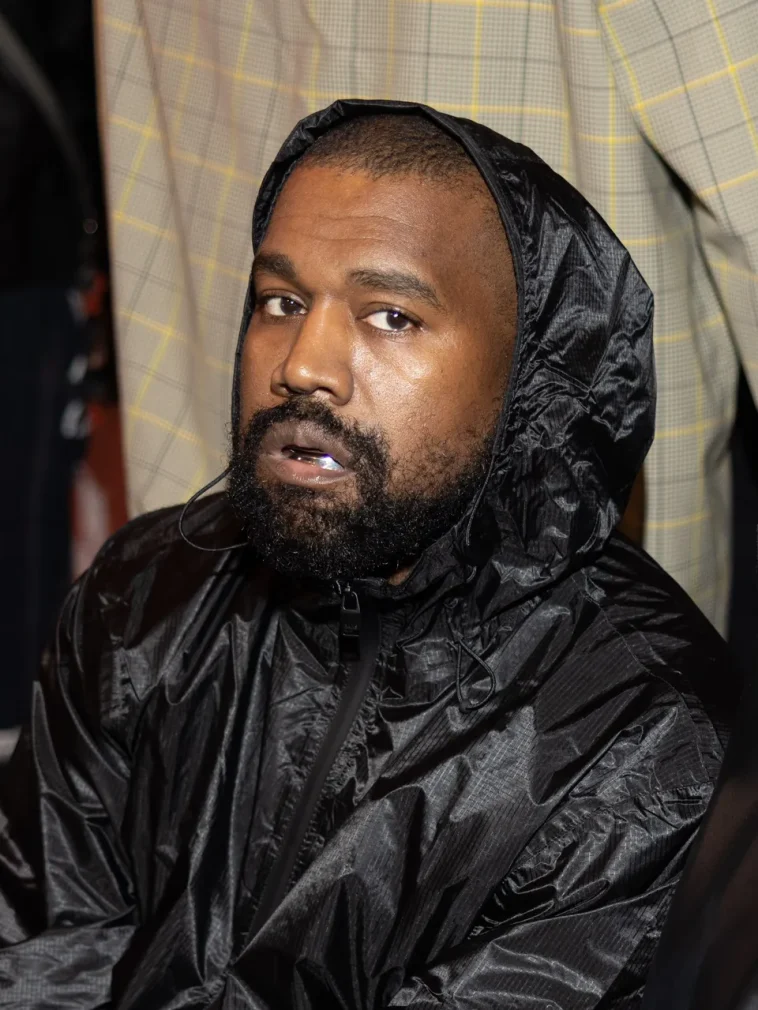
When Ye chose to issue a formal public apology in January 2026, he did not do it the way modern scandal culture expects. There was no Instagram Notes screenshot, no livestream, no chaotic late-night monologue. Instead, Ye placed a paid ad in a major newspaper and followed it with a long, probing conversation with Vanity Fair, inviting scrutiny rather than applause.
The letter, titled “To Those I’ve Hurt,” arrived at a moment when Ye’s career appeared to be cautiously reopening. As reported by The Wall Street Journal, music company Gamma convened internal meetings with Jewish and Black employees before finalizing a seven-figure deal with the artist. The apology was not incidental to that process. It was central to it.
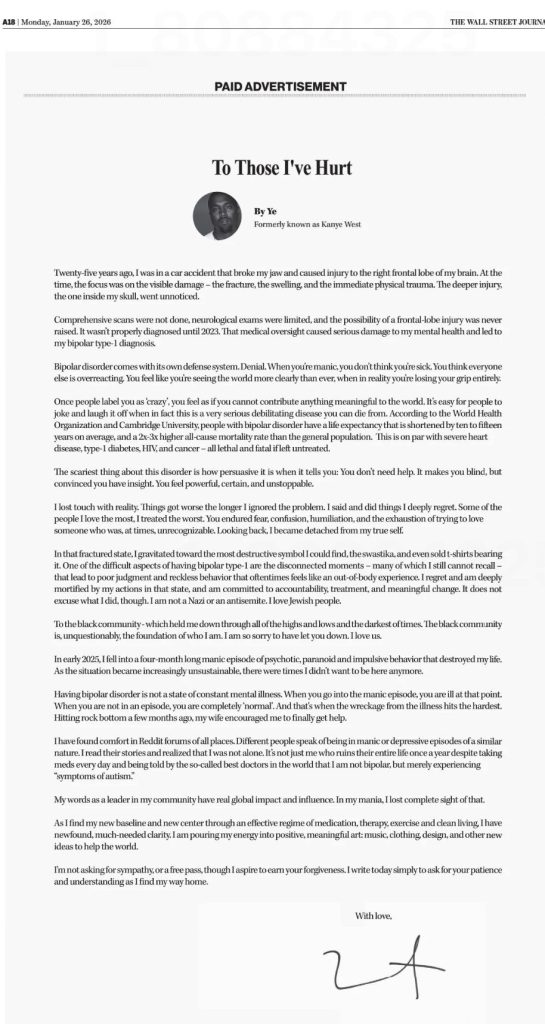
In the statement, Ye directly addresses the Jewish and Black communities, naming them explicitly rather than speaking in abstractions. To the Black community, he writes, “I am so sorry to have let you down. I love us.” To Jewish people, he expresses regret for language, imagery, and associations that reinforced antisemitic harm. The tone is restrained, almost sober, a sharp contrast to the grandiosity that has defined many of his past public moments.
What makes this apology distinct is not just what Ye admits, but how deeply he interrogates the conditions that shaped his behavior. He traces a throughline back to a 2002 car accident that nearly killed him, an event he now says caused damage to the right frontal lobe of his brain. According to Ye, that injury went undiagnosed for years and contributed to impulsivity, poor judgment, and emotional dysregulation that later manifested publicly.
That claim is not left standing on Ye’s word alone. In the Vanity Fair interview, renowned neuropathologist Bennet Omalu, best known for identifying chronic traumatic encephalopathy in football players, explains that traumatic brain injuries can produce behavioral and mood disorders over time. Omalu states that such injuries may result in progressive cognitive and impulse-control impairment, often requiring long-term medical and therapeutic care. In Ye’s case, he describes the connection as not only plausible, but substantial.
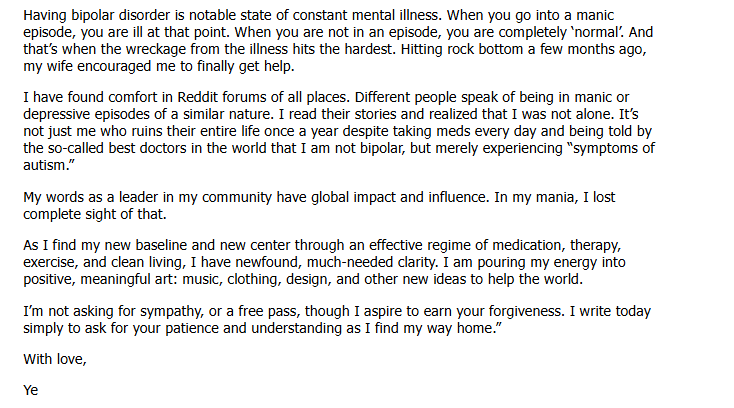
Ye also speaks candidly about bipolar I disorder and a four-month manic episode in 2025 that he says included psychosis, paranoia, and impulsive behavior. He describes “disconnected moments” that felt like an out-of-body experience, a state in which he gravitated toward the most inflammatory symbols he could find, including Nazi imagery. In the letter, he does not attempt to soften that history. He names it directly, writing that he is deeply mortified by those actions and committed to accountability, treatment, and meaningful change. He adds a sentence that appears carefully chosen: the explanation does not excuse what he did.
That distinction matters because skepticism remains widespread. Avinoam Patt, director of the Center for the Study of Antisemitism at New York University, tells Vanity Fair that years of antisemitic rhetoric have understandably eroded trust. Patt calls the apology a beginning rather than a conclusion, emphasizing that genuine repair will require consistent, visible actions over time.
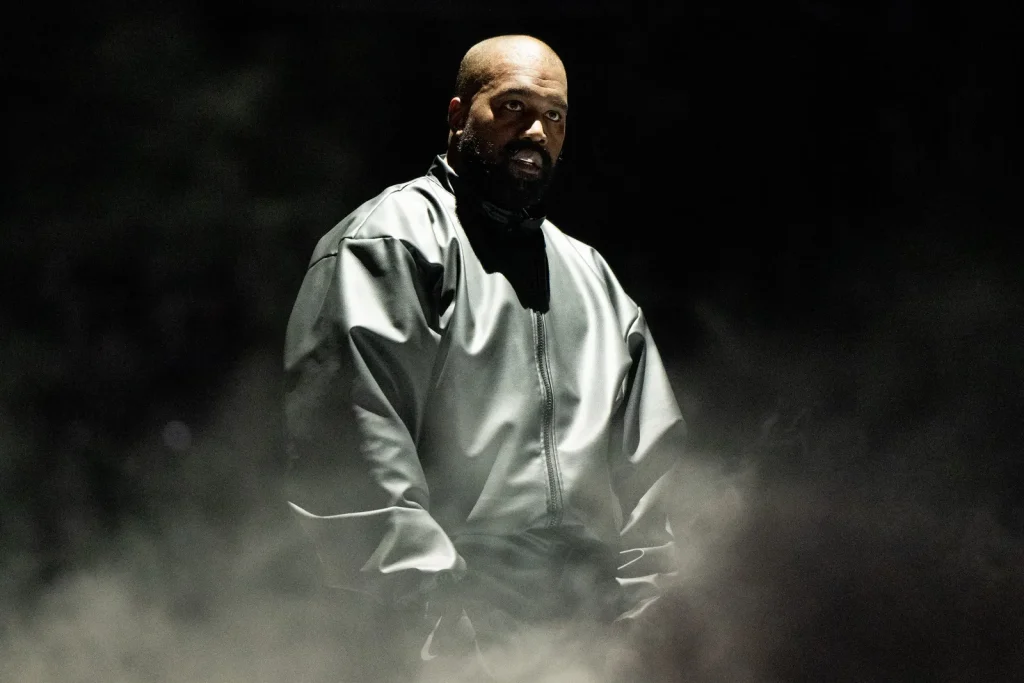
Ye appears aware of that doubt. When asked whether the apology is simply a strategic move to remove stigma ahead of new music and business ventures, he rejects the premise, noting that his music continues to perform at elite levels regardless. He frames the apology instead as something personal and internal, describing remorse that has weighed on his spirit rather than on his commercial prospects.
The interview also marks a notable shift in Ye’s relationship to treatment. Once openly resistant to medication, he now acknowledges that mismanaged dosages pushed him into a deep depressive episode and that his wife encouraged him to seek more stable care at a rehabilitation facility in Switzerland. He speaks about the particular challenges Black patients face with antipsychotic medication, including heightened sensitivity and side effects, and emphasizes the difficulty of finding balance rather than rejecting treatment altogether.
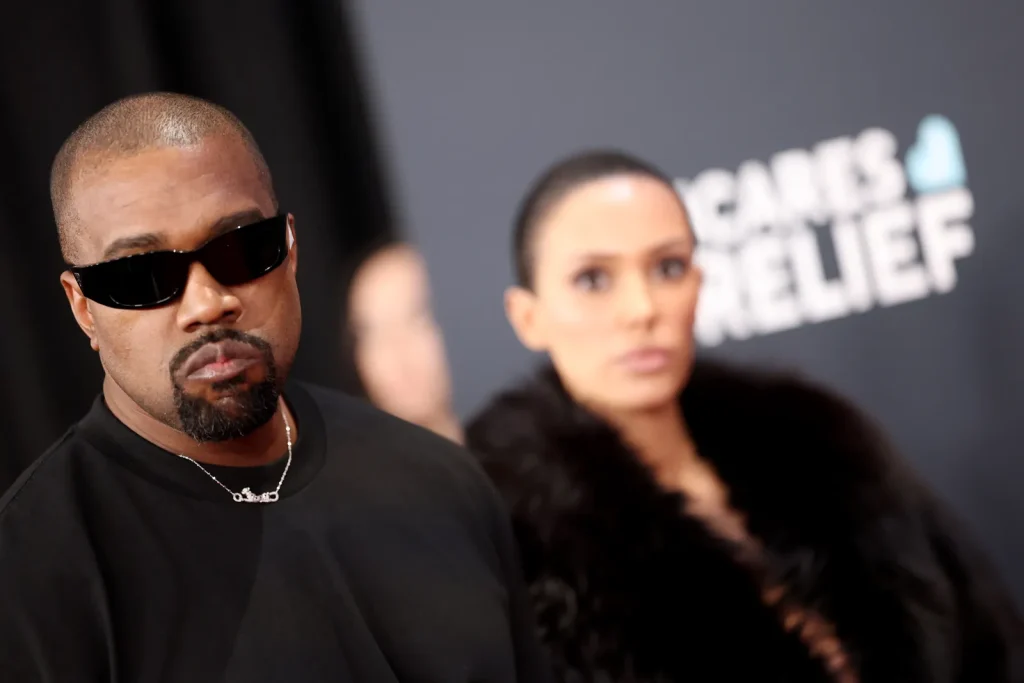
Taken together, the apology, the medical context, and the public scrutiny form something closer to a reckoning than a reset. This is not redemption, and Ye does not ask for forgiveness. What he asks for instead is patience and the space to demonstrate change over time.
Whether that request will be granted remains uncertain. The damage he acknowledges is real, and so is the skepticism surrounding his return. But for the first time in years, Ye’s public voice is not demanding belief or obedience. It is asking to be examined, challenged, and judged not by rhetoric, but by what follows.
If this moment proves meaningful, it will not be because of a letter, a deal, or an album rollout. It will be because accountability, unlike controversy, cannot be performed once and abandoned.
GIPHY App Key not set. Please check settings